All Night Long: TorahCycle Vayishlach

Vayishlach2013Let’s get clear. I’m not an advocate of no-pain no-gain. If anything, I honor the high arts of bargaining, denial, procrastination, half-measures, and prayer as sincere, even fervent, alternatives to doing what needs to be done. That’s especially true if the focus isn’t my creative jones du jour, or involves self-discipline in any but brief or minor forms.

Enough about my failings. What about yours? Do you step up and do what’s needed, without avoidance? When you’re given dictums like Eat less, move more; or, Save more, spend less, do you hop to or look the other direction?

This week finds Jacob travelling to reconcile with the brother he wronged. He’s laden with gifts and an army, hedging his bets, as most of us do. We offer our adversary (self or other) both carrot and stick, hoping one will work if the other doesn’t. [Note: What’s a strategy to us might seem foolish or random to an observer. Without consistency, insights are harder to discern. Sigh.]

Jacob wrestles until dawn with a stranger, an angel. A silent and important emissary of the divine. Part of the message: step up, and don’t give up. If you do, you risk staying stuck wherever you are in your process, like when someone yells “Freeze!” in a childhood game.

Continuing until dawn doesn’t ensure a decisive victory. Jacob ends up with a permanent limp. But his name is changed to reflect his commitment and a big chunk of his old bad karma drops away. The message: If you actually work your program, something will change. Not exactly as you might predict or wish for, but for the better.

I’m fascinated by the wrestling metaphor. Not the bombastic faux battles of cable TV. But with the premise that no matter where we go, we’re always gonna come face-to-face with our stuff.

If you ask me to summarize the personal growth story, soul-wrestling would be its verb. It takes place in many domains, from deep dreamland to cold light of day. We are invited and frequent visitors.

Your adversary may wear the face of a mysterious stranger or someone you know. May come at you in a red satin cape or a clown costume, with flowers or with a chain saw. May sound like your internalized parent, a disappointed partner, or an angry boss. But your real nemesis is always your own stuff.

The good news: When our procrastinating and half measures fail, when we’re on the run from our failings, our higher selves show up to change the channel. To give us a real wrestling match. To help us find what we’re made of. And to send us on our way with a deeper knowledge of our own strength and possibilities.

We don’t always hang in. We’re scarred and scared and we sometimes give up, say Uncle. It’s okay.

We still have lots of wrestling ahead of us. But this reading reminds us that it’s time again to go deeper. To embrace your resolve and your endurance. To work your program. Wear your scars proudly; give yourself credit for what you’ve accomplished. Then move forward not weakened by the struggle, but strengthened and renewed.
Here and Now: TorahCycle Vayetze

vayetze 2013

We all have sacred places. Places that make us feel completely safe, held. Places that expand our consciousness. That connect us with the world of the unseen, either by their majestic grandeur or their simple peace. As we go through life, those places and their talismans shift. Your crib and blanket give way to a special park or beach, or a magnificent vista. Any places that come with a special knowing and a healing resonance we respond to as sacred, and accord them reverence and appreciation.

This week’s reading finds Jacob on the road. He’s left his father’s house and his brother’s anger; he’s off to find a wife. The image of a stone shows up several times, early as a pillow and later as the memorial of a peace treaty. Both times, the sites are declared holy places.

Stones sometimes say Notice me! when I’m out walking. I especially like it when they appear as I’m wrestling with a problem, trying to gain insight and clarity. They come home to sit with others that said hello in the past.

Altars everywhere. That’s a lot of what Torah is about. Journeying from sacred place to sacred place. Finding them, recognizing them, naming them. Acknowledging both the divine presence and the reciprocity of that relationship.

This reading brings us the phrase Jacob’s Ladder, a stairway he dreams of, angels coming down and angels going up. Last week for Halloween folks had faux cobwebs everywhere, obscuring things. This is the opposite, a route of direct transmission. He calls it HaMakom, literally “the place,” as in God was in this place and I did not know.

HaMakom is a place to ask questions as much as to hear answers. There’s a quality about the asking, getting to the bedrock of your sincerity, that clears away all the extras.

The Hebrew word for angel is generally translated as messenger. And that’s ultimately what angels are. Bringing you what you need when you need to hear, see, or receive it. These messengers can be the person who stops to help you with your flat tire or the stone on your path.

We are those messengers too. Appearing in hamakom for one another as and when we are meant to be. Angels in our human skins.

In Nicole Krauss’s History of Love she says: Angels sleep unsoundly. They toss and turn, trying to understand the mystery of the living. They know so little about what it’s like to fill a new prescription for glasses and suddenly see the world again, with a mixture of disappointment and gratitude. Because being human is more complicated, more raucous, and more painful. But the more we engage with what we’re here to do, the more vital it feels to do it well and right. The more clearly we see.

Hamakom is not just your own little bubble. It’s all of our bubbles interacting at the same time. So it’s important to be here now. In hamakom. For you and for the rest of us.

Whenever stones or angels talk to you, listen up. Hamakom is wherever you go, wherever you are invited. It’s where you are right now. We’re always in hamakom.

Your Evil Twin: TorahCycle Toldot

Toledot 2013

We’ve all got them. Not just one; more like a handful. They usually appear as counterpoint to however we’re trying to be. Typically at inconvenient, even critical, moments. The shadow sides of who we aspire to become, even if we generally act more evolved.

There’s no mistaking when they show up. Like an anti-fantasy. You’re aiming for charming: out comes the truth teller or the boor. Need to be articulate or persuasive: stupid brain takes over. Your evil twin embarrasses you. It also steers you to self-sabotage, both active and passive, decisions both made and avoided.

To be clear, your evil twin might be something I aspire to. My best self might be someone else’s evil twin. We’re all here doing learning different lessons. So our shadow selves take different forms and bring different lessons.

This week’s reading’s about two brothers. Opposites: bookish vs. hunter, sly vs. forthright, strategic vs. wanting immediate gratification. The one who lies and cheats to gain an inheritance? After his own tough homework, he’ll transform into a revered patriarch. There’s hope for us all.

Torah’s enacted in a time when we lived more outside. Sat by the fire after dark. Looked at the stars and shared stories. Who a person was, was in part who they were told to be.

Who “you” are is how others speak and think about you, as well as who you feel on the inside. A gap between aspiration and action can exist even when it’s just you watching. But when your twin takes the wheel, your foibles are prime time.

We tend to see what we want and surround ourselves with folks that seem to like and accept us. If our shadow has little need to appear, we can coast pretty easily through our days. No need to look into our darker corners.

But each time your inner twin reaches for the foresworn chips or chocolate, picks a bad relationship, acts stubbornly, selfishly, or foolishly is a chance to look deeper. To ask what your hidden, hungry, unfulfilled self really wants.

We’re attracted to certain types of people or situations. We know when we’ve met our kin, whether that’s religion or voting pref, profession or sexual orientation. Your twin feels safe, and less likely to act up or out.

Other times we seem predestined to butt heads. Things and people that don’t fit so nicely, no matter how you might want them to. That electric bristling of not liking. Nothing seems to come out right. Murphy’s law condemns every word and action. What a playground for the evil twins!

These people and situations are in our lives to teach us. Yes, the lessons reflect a side of ourselves we’d rather not  be known for. But seeing and naming are good ways to bring your shadow into the light. Not always pleasant but necessary to grow,

Think about people and situations that push your buttons, where your not-best-self pops out of the woodwork. What do they have in common? Knowing will show you the parts of you that need more work and integration. They’ll almost certainly offer you more chances to do your karmic homework.

Let’s Talk Relationships: TorahCycle Chayei Sarah

Chayei Sarah 2013

When people kvetch or dream, the topic of their soul mate, true love, partner, or the absence of same is often high on their list of joys or laments. There are people who are well-loved and happy in their romantic life. Mazel tov. Other folks who are single and looking, hoping, and praying for love. Yet others partnered, but feel uncertain, taking  inventory and weighing possibilities.

There’s a great Hebrew song, Dodi Li, with the refrain, I am my beloved’s and my beloved is mine. It’s sung about a relationship with the Divine, but it’s also about earthly love. Ditto the Song of Songs, evocative prose about passion, for one’s beloved and God.

Being loved matters. It’s embedded in our psyches. We yearn for its bountiful blessings. It’s about sensuality (where it often begins). It’s also about creating friendship, family, and ultimately about caring and support. A depth and duration of witnessing.

That’s the basis of this week’s reading: the death of a mother and the finding of a bride. In both cases the women are wise, compassionate, enduring, and loving. Not the first four words in most match.com ads.

Some folks genuinely prefer to be single. Others can’t endure a month alone before coupling again. And a rare few met their life love early and stayed together. Most of us, however, have bounced unevenly through dating and relationships, and have a history of base hits, maybe even a home run, but also lots of swings and misses.

Is it because we’re looking for the wrong things?

The complex algorithms of cyber-dating notwithstanding, creating a good, strong, long-lasting relationship is work. Fact: I also write an advice column. Most people’s relationship questions boil down to two: How do I find and keep a good one? How do I dump or change a bad one?

My answer: look within. Look within yourself and look within your partner, prospective or actual. Look for a depth of heart and soul that makes you want to share your deepest truths. That makes you feel seen, accepted, and loved, as well as passionately alive.

Most folks go partner shopping with “lists.” Requirements and deal breakers. Everything from financial security to table manners, looks to profession. But nothing substitutes for chemistry. That sense of recognition you feel when you realize someone’s gong to be important in your life, whether it’s a teacher or a colleague, let alone someone to date.

Because we’re here to do that for one another. To inspire, to help, to teach, to excite, to listen, to share, to share laughter and adventures, and to say what needs to be said. To witness one another’s highest aspirations and deepest pain. To be there in triumph and in despair. As needed, without being asked. I am my beloved’s and my beloved is mine.

This week think about what you most value in your relationships. I’m talking family of choice and of origin. What do you care about most in the people you love? What do those who love you love most about you?

Try to be more of all those qualities, towards yourself and others. The practice will change you, in good and lasting ways.

Showing Up: TorahCycle Vayeira

Vayeira 2013

Sometimes we’re asked to do things we don’t want to do. Dinner at your least favorite relative’s. Job-hunting. Dieting. But these are mild and paltry compared to Abraham’s task: to take his son to a mountaintop and sacrifice him.

I’m jumping past an abundance of deep theological issues to ask what happens when you’re asked to do the seeming impossible.

This reading pivots on the word hineini, I am here. An answer given three times. Hineini’s about showing up. About bringing along every part of yourself, faith to doubt and everything in-between. Integrated, even for one instant.

The old quote says Life is made up of moments. Rembrant’s great painting of the Isaac sacrifice depicts the moment when everyone is completely present. It speaks to the exquisite tension of not knowing what will come next. The peek-ahead/fast forward part of you that wants to but doesn’t.

What does being fully present require? It means dropping all fear, all doubt, all attachment to past or outcome. It transcends reason. There’s a trust in the flow that says, If I really show up, what follows will be as it should be.

There’s a big concept in spirituality about surrender: “letting go and letting God.” In contrast to the western idea that we’re responsible for what happens to us. Countered by the Greek idea of fate, or the Islamic inshallah, as God wills it. Or eastern karma: you get what deserve; but your earned betterment might not show up this incarnation.

These days there’s lots of mixed messaging about conscious co-creation. “The Secret” offers us everything, if we just want it enough. The accusation “control freak” judges us harshly for trying too hard to bend the universe to our desires.

How can you find the right balance? Start by releasing what keeps you tied to old patterns. Put them on the altar and let them go. Show up for the change you profess to want.

Sometimes we must sacrifice exactly what we most cherish. Our closely held beliefs. Our addictions. Things we think we cannot live without. Precisely what keeps us tethered to our old patterns.

But it isn’t easy. Even to let go of what seems obvious to release (your anxieties, your painful memories, your sadnesses). They’re entwined in your roots. Part of your identity. Become so much a part of you that you’ll need the knife to cut them out. You may fear the process will hurt, or that their absence will change you too much. Yes, ouch.

But what if you could put anything that holds you back on an altar, and poof have it gone? Like an angel appearing. Your problems solved.

In earth reality it doesn’t happen so simply. Our lives are a complex symphony of surrender and control. Showing up, doing, hoping, and praying in a busy, awkward, uncertain dance. All in the hope that a wise and useful answer will become clear.

This week, think about the hardest sacrifice you could make in the service of your goals. Open every receptor you have. Listen to what you’re told. Then ask yourself how you can be fully present to follow through.

Step By Step: TorahCycle Lekh Lekha

LekhLekha 2013

Judaism is only part of my spirituality. But I genuinely believe that embedded in Torah is great insight and guidance for self-transformation and development. Most of us have embedded in our brains Bible stories and imagery from childhood. But deeper Torah raises lots of questions and challenges that can help you shape your now, and your becoming.

There’s an arc to the evolution of souls: your getting from creation to whatever’s your version of a promised land. Last week, the first thing Noah did after escaping annihilation was to get drunk and have sex. Ooops. Like eating a brownie an hour after starting a diet.

This week, the first thing we’re told is that Abraham is to leave the house of his parents and the land of his birth. He’s to set out for somewhere new and unknown. It’s a metaphor for walking away from what in your past defines you too closely. Whatever constrains your ability to grow and evolve. An instruction to leave behind your old habits. To prepare for the possibility of the new. To change without knowing what will come. But because you are ready to embrace the possibility and importance of making that shift.

Most of us have screwed up. Usually not just once. For our core issues – – love, food, money, or deeper — screwing up is probably familiar territory. Now’s a great time to begin to make a shift. Maybe not packing and calling u-Haul, but by doing something that feels potentially as important. Deciding to make a fundamental shift in the shape of your reality, your daily life, and your beliefs.

The first big step is self-scrutiny. The next, deciding what to change. Everything after is follow through. Aiming yourself in a different direction. Then continuing, step by step. Making your life about who you want to become, not who you have been.

In the beginning, the changes don’t have to be huge, or even consistent. Even doing one thing differently every other day will begin to increase your awareness. Consider every act a choice.

If you’re like most of us, you won’t walk in a straight line. You might go sideways, in circles, even backwards, for days, weeks, or longer. But each step is a step away from the old, a new step on your journey. Self-reinforcing and invigorating when you succeed.

It’s much easer to see other people’s paths. Your friends’, partner’s, or family’s. You have the perspective and vision to see quicksand two steps or two months ahead of them much sooner than they seem able to. You can see them looping around, not knowing they just veered way off course. (They can do the same for you.) It’s harder to see that clearly for yourself.

Life is such a fascinating and tenuous mix of insight and knowing, intention and awareness. We make greater progress when we add in faith. Believing in yourself is a great starting point.

That’s how change should begin. An energized mix of vision and focus. Sep by step it leads to manifesting. Anticipation and determination. Acknowledging the difficulty of change, but committed to trying. All your doing counterbalanced by the receptivity of an open heart.

Step by step.

Points of Light: Where Kabbalah Glass Comes From

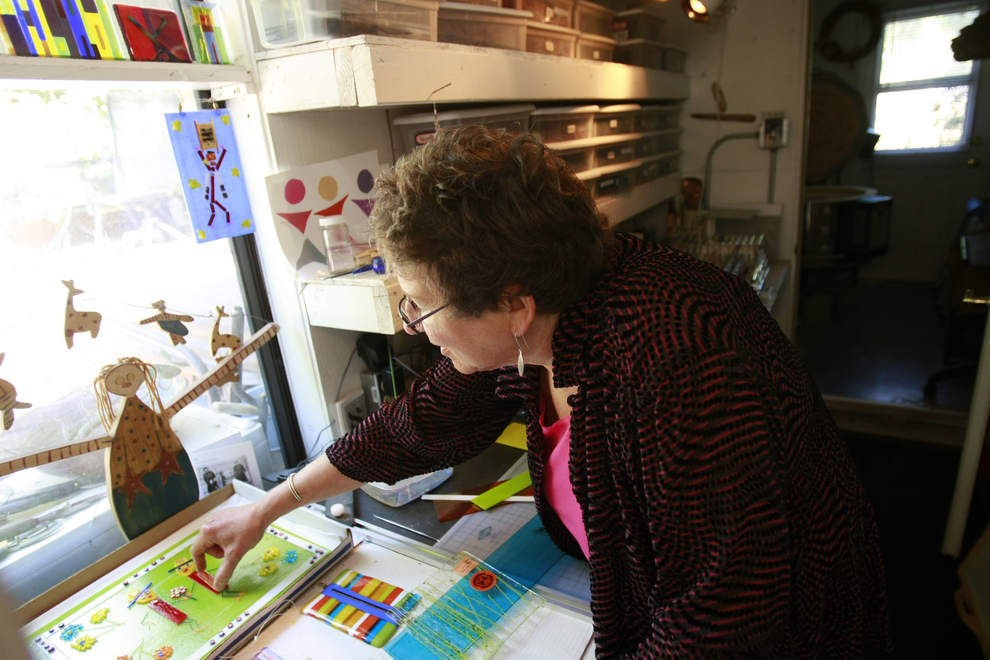
RG2Some chest-thumping below, though in fact I feel very humbled at being so well witnessed by someone. All a writer or artist can ever hope for is that other folks “get” what we’re trying to say, whether it’s with words or art. Feels good.

http://registerguard.com/rg/life/dash/30110442-64/rosenau-glass-says-art-eugene.html.csp

RG 1

Second Chances: TorahCycle Noach

Noach 2013There’s a great health prayer that gives gratitude for body parts appropriately open and flowing or closed and contained. It’s really about sufficiency and balance, the harmony of a smoothly functioning system. Excess or blockage can create chaos, as we’re told happened after creation, with generalized self-serving corruption.

Some excesses, large or small, are a source of joy. Falling in love. A beautiful day. Sublime music. A clean house and a good book. Heading out for an adventure.

But highs are often countered by lows. Being dumped. Traffic jams or flat tires. Leaky roofs. Not enough of whatever you think you need to be happy.

This week’s reading’s about what happens after excess. A total reset. Wiping the creation slate clean and starting over. When it happens to you, it’s easy to feel like the folks in the post-Katrina or –Sandy pictures. The forlorn survivors, standing in matchsticks of rubble, as far as the eye can see. Few volunteers to be that poster child.

Our lives are rarely one smooth arc.  We go through many cycles of joy, excess, loss, hope, and renewal. Over love, jobs, homes, births, deaths. Often much more trivial endeavors. Our lows aren’t as brutal as global devastation, but when you’re hurting and weeping, no matter the cause, it can feel that hard.

When we careen too far in one direction, we tip the balance, inviting in lessons that, if we were paying better attention, we might learn without having loss and pain come as teachers.

Chances are you’ve bumped into those lessons before. That they’re the ones, no matter how well you do with your other karmic homework, that you just can’t quite seem to get out from under.

You might see the storm clouds coming. External circumstances pushing you towards some edge. Or your own emotional patterns steering you onto the rocks. The universe is filled with hints and foreshadowing. But, if you’re not paying attention, you can get pretty wet before you find dry land again.

Most of us have good instincts about what’s important to our happiness, whether that’s body, mind, heart, or spirit. Think about the yin and the yang of what matters to you. What you’d really need to create your next world. Bring that on board. Then release what’s ready to be washed away as you enter the ark of your future.

Most of us won’t see doves bearing divine messages. But hopefully you’ll learn the markers of better decision-making and know what to do next.

At the end of the Noah story, the rainbow symbolizes the divine promise that devastation will never again be so total. Translation: once you’ve tanked, there’s nowhere to go but up. You’ve earned another chance to get it right. Another chance to get clearer about how you want to live.

Take time this week to think about the next cycle of your adventure. What do you want your life to be about? What parts do you need to shed, to say Thanks but good-bye? Which to heal and improve? To invest in, give voice, learn from? If you can contemplate the answers with more curiosity than fear, hooray for the promise of this next round.

In the Beginning (Again): TorahCycle Bereishit

Bereishit 2013Someone asked me recently what this blog is about.  My answer: to help you answer the question Who are you in the process of becoming?

Torah readings offer a vehicle for self-transformation. They help us to look through the window of the aspirational self. To listen to what the words are saying about how to live. Me. You. Now.

Almost all of us wrestle with something, for that long night we call life, the way we’ll soon remember Jacob wrestling with the angel.

We each have our own issues and process. Some are unhappy in a relationship or a job, while others long for one. There’s body stuff, and money stuff, and friend/family stuff. All the aspects of our daily reality that our minds chatter and fret about so much and often. There’s soul stuff too, whether that translates into becoming a meditator or simply kinder, deepening a spiritual practice or searching for a resonant path.

We’ve cycled back to Genesis. Creation. The edge of another new beginning.

You may believe in the Big Bang, The Voice/Hand of God, or a different creation story. But anyone who’s ever had a brainstorm knows how quickly something can appear out of apparent nothing. An idea bursts through, alive with energy. The synergy and synchronicity of all of you. Your history and your becoming. Your holy spark glittering to show you the next next. Suddenly a vision, where a moment before there was not. A new world of possibilities, multiplying quickly.

That’s the way to start this year.

Shed last year’s battles and disappointments. Bring with you what you’ve learned, what you earned, and what you aspire to. Leave behind the old struggles, fears, and sorrows. Start over cleansed and optimistic.

Poof! What an idea!

Here’s my invitation: To celebrate creation, give yourself time this week to invite new ideas about how you want to feel this time next year. With hopes you’ll feel like you’d just won the lottery of your life and soul. Like you can create the world you want to live in.

It’s another chance to reinvent you. To edit and to refine. To take everything you’ve learned and have it become your ally. A mini-reincarnation without having to start over again with diapers.

A lot of the “in the beginning” story is about separation and discernment between opposites: heaven and earth, day and night, land and sea, and so on. It’s also about free will: following instructions or risking the consequences of your actions. We all face those kinds of choices every day.

As you make them — consistent, impulsive, risky, wise, or not — some of the glittering possibilities of your great new ideas will fade. And some will grow brighter. The array of bright lights will narrow and cluster. As they do, your life options will become clearer. If you’re lucky or blessed, and can hear the hints and instructions coming from your inner voice, they’ll even show you the paths for your evolving journey.

I’m suggesting folks journal this time around. Whatever strikes you as worth remembering along the way.  If you’re so moved, write yourself or the rest of us a note below.

Harvest Time: Succot 2013

Succot 2013Anyone who’s visited a farmer’s market lately knows it’s a gorgeous time of year. Abundant in virtually every fruit and veggie we could conjure: bright, fresh, full of nutrients and flavor.  As we give thanks for nature’s blessings, we’re filled gratitude and delight. Wouldn’t it be grand to feel so enthusiastic about your own progress?

We’ve also reached almost full Torah circle. The perfect moment to look at how far you’ve come with what you started “in the beginning.”

You know the questions I care about in this blog: How can we create greater awareness and intention? How we can elevate our recalcitrance? How can we better connect to our holy spark? How we can become lighter beings, kinder and more compassionate? How can we heal our core stuff? How can we live with greater goodness and joy? How can we be fully present in the moments of our lives?

This week’s about looking your crap in the eye and saying both Good job! and I can do better.

Acknowledge where you’ve fallen short of the mark you’d hoped to reach. But also remember to give yourself credit. What you failed to score in reality points you may have reached in insight. Getting holier and wiser, or even healthier, more successful, or better partnered is a process that takes time. What’s more important than paying good attention, stepping up and trying to do better?

Judaism has a holiday for this season that involves setting up a small booth. The kind you might see at a craft show. A place to go, eat, and pray regularly for a week. To sit in the field of your being and say: This is what I have sown, and this is what I have reaped.

Poet Marge Piercy, speaking of the High Holidays, observes: I will find there both ripeness and rot./ What I have done and undone/ what I must let go with the waning days and what I must take in./ With the last tomatoes, we harvest the fruit of our lives.

That’s what this week is about. About making good salad, good  blessings, and enough time to contemplate the fields of your soul and your life.

It’s a time to breathe a little deeper and move a little slower. Be more contemplative as your lungs fill with both late summer and incipient autumn. Feel your heart nostalgic for the seasons ended as you remember the bright daffodils in your future.

That’s one of the beauties of Torah. The cycle repeats, and we get to appreciate it before we start again.

Jewish days begin at sundown, and Jewish years in autumn. We go inward into the darker time, getting ready to listen. Now’s the time to prepare to do better, while you can still taste the fresh tomatoes. A time to get ready to change I did into I will. To say good-bye and thank you, before we say Hello again. I’ll do better.

This week take some time to be silent, truly silent, and sit outside. Then listen to what you are being told about what has been and what comes next.

That’s your homework for now, and for the next round.