Day By Day: Counting the Omer

TOLEvery year in spring mystical Jews do a seven-week daily meditation. It’s multi-dimensional tour of aspects of divinity and self called The Counting of the Omer.

The practice stretches between two major sacred festivals. First, Passover, commemorating the exodus from Egypt (“the narrow place”), but more symbolically about leaving places of constraint. Think about a momentous life shift, like divorce, or a healing crisis. It’s about moving into a new and better you. Forty-nine days later comes Shavuous,  Sinai, being in the divine presence and taking it in through every pore of every incarnation.

They’re the book ends. Here’s how the middle works:

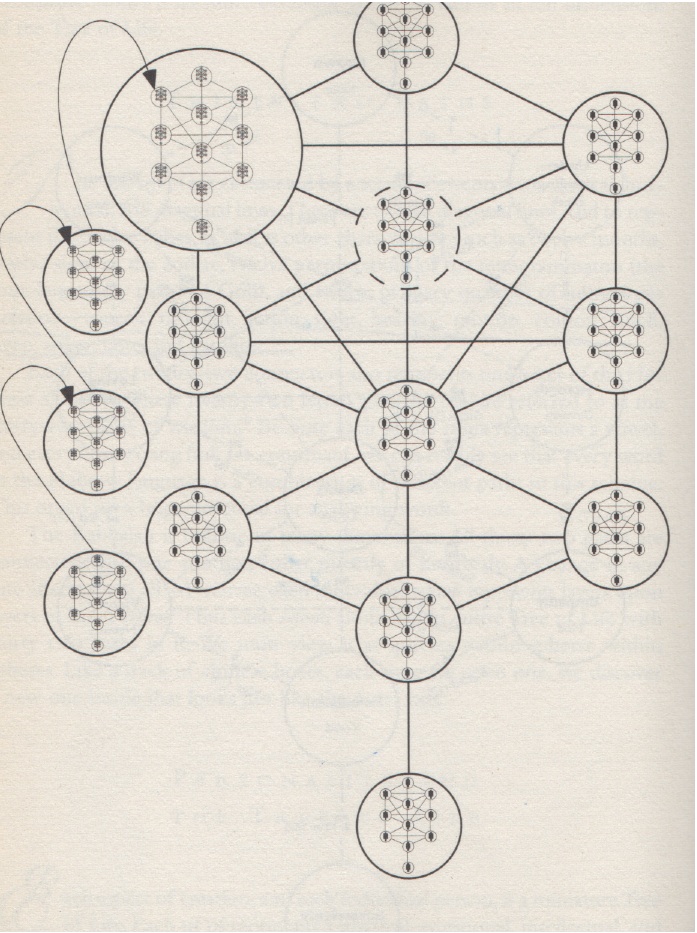
Tree of Life in Judaism refers to the symbolic tree of creation and to a paradigm of how to look at the world. The Tree is a set of stacked triangles that operate in triads: a characteristic, its opposite, and a balance point. They’re traditionally represented as spheres, called sephirot. The bottom seven are a strong and useful paradigm to use for solving any personal issue you’re wrestling with, aka getting out of a narrow place.

The first triangle is about unconditional love, discernment, and compassion. For an example, in relationship terms, think about: I love you madly forever; I need more boundaries, space, and time; Let’s work out something that’s good for us both. The  names of these spheres are chesed, gevurah, and tipheret.

The second triangle is about your life force: What energizes you? How and where do you aim it? What’s possible? In creative terms, it’s your Eureka! moment; your final draft/exam/signature/etc; and the possibilities that open up come from becoming an author/doctor/homeowner/whatever you’ve been striving to manifest. The spheres are netzach, hod, and yesod.

The seventh sphere is malkuth, the kingdom of here and now. This reality. How you pull all that powerful everything into the day-to-day of this life you’re living.

Week 1, which starts Tuesday April 15 at sundown, is a week of meditating on chesed. How you are open, generous, expansive, giving, and filled with love. Every Tuesday at sundown for the next six weeks is committed to each successive trait.

The holographic path has circuits of each sphere within the primary trait of the week (7×7=49 days). Omer-holoFirst you think about how loving you are, then why it’s good to have some boundaries, how to set them with grace,….and so on daily, through each trait. You can Google for daily meditation prompts from various perspectives, or ask and listen to your heart for questions as well as answers.
I recommend naming/numbering journal pages with the traits before you start, because it’s easy to slip behind and harder to get back in queue. This is a practice very worth doing, especially if you can identify one issue that you’ve been grappling with and feel like you’re stuck in a repetitive cycle that’s not leading you forward. You may not get to goal, but you will almost certainly get new insights and ideas about how to change your perspective and behavior.

So just for fun, starting bedtime Tuesday, think about how you are giving, loving, open, generous, and kind, in all the aspects of the Tree of Life, and see how it changes your now. Then work your way through each trait.
Making My Mishkan: TorahCycle Vayakhel

Class - Post

Much of this week’s reading is about the making of the mishkan, the portable ark, and the accoutrements for its assembly and use. I’ve spent the past several weeks working on a different sort of mishkan, the workbook for a class/process I’m developing. I’m loving the chance to re-encounter Jewish mysticism and to express my take on Kabbalah, the system of insight that’s become the spine of my spiritual journey.

Our spirituality is deeply individual. We may share holidays or prayers, language or metaphors, a belief in what’s eternal. But at its heart, spirituality is a conversation you have most often with yourself, and with the world of the unseen, however and wherever you encounter it.

The mishkan is a receptor site. A place to encounter the world of the unseen in space-time.

Some folks get that sense of connection in services or ritual. I find it most often through writing. In the magical connection between words and synapses. Images and ideas than run through me, teach me, help me talk to others.

I hope you find this place, because there’s few feelings as good as being connected with a wisdom greater than one’s own.

Developing this course is pushing me to go face-to-face with my beliefs and practices. Just as the ice storm that disconnected me from the internet for days left me grateful for my wood stove, I’m distilling what really matters. What’s necessary and core. What gives nourishment. When it’s incredible joy, it’s rewarding from soul to gut. I hope the same for you, however you get there.

I’m working through images and practices that connect us with our highest selves, and that help us examine why our less noble parts sometimes grab the wheel. I’m trying to express these concepts in ways that feel accessible and whole. As I do, I’m struck again by the importance of sharing our best with one another. For me, that’s writing and problem solving. For someone else it might be singing or carpentry.

We’re a community. Each one of us part of a whole trying to express itself through the imperfect instruments that we are. Our job is to listen well, and then do our best to give our best. Together we make a mishkan, a place to receive the holy and to heal this imperfect world.

We may have snarky days, or clumsy ones. No one can be sacred and in a good mood all the time. No email, phone, and FaceBook made me cranky as well as giving me time to write.

Being human means we need lots of slowing and quieting down to hear what we’re supposed to. Turning down outer noise, albeit not by choice, brought all the blessings of any great vacation or extended Shabbat. A chance for reflection, for hearing the universe tell me more than I often try to ask or tell it. Visiting the mishkan of greater quietude.

By being in your own mishkan you’ll hear what you most need. Let what comes through open and teach you. However you find your mishkan, I hope you’ll visit often and receive much.

PS – If Discovering Your Inner Tree of Life sounds interesting, please let me know.

Home Base: TorahCycle Terumah

Terumah 2014A lot of my spirituality comes from the idea of being told. Of instructions about everything from my karmic homework to where I put my glasses. Messages that come with a deep sense of knowing: a synchronous recognition in my head, heart, and gut. Like the puzzle piece that slides perfectly into place, it’s an awareness of direction and action that just feels right, even if sometimes it also seems challenging, or ironically simplistic. Of course I need to be listening to hear it.

Most of us get instructions for from context. From family, teachers, partners, and mentors. Verbal and nonverbal. (Insert the classic image of my mother pulling her shoulders back and square like a drill sergeant, hissing Stand up straight!) Sometimes we listen and sometimes we don’t, to our benefit or peril.

The reading’s about the construction of the miskhkan, the portable ark the Jews will carry through the desert. It acts as home base. A place for people to gather and listen, and for HaShem to communicate with them. Such a fascinating contradiction between the core idea of indwelling spirit (our holy spark) and the need for a special site for God to visit and instruct.

I recognize and respect sacred spaces, from the comforting hush of formal sanctuaries to the hidden magic of ancient painted caves. But I prefer the idea of a portable sanctuary that’s in me. A beacon emitting the Help me, Teach me, Thank you signal the way the SETI Project sends earthly transmissions to whoever’s out there listening.

My word for that inner mishkan is HaMakom, a God-name that means The Place. Completely portable. Where the inner and outer rest within one another. HaMakom can occur anywhere in space-time. In nature or dreamtime, meditation or inspiration. It’s a conversation between worlds seen and unseen that feels just right.

No one yet knows how long they’re gonna be on the road. Making something together is a bonding exercise. Everyone contributes: money, ideas, thread.

The idea that you could make a place to invite the divine to show up is seductive. The instructions, like Noah’s ark, are many and specific. Part of the message: it takes work and time to get where you wanna go. Lots of steps. Collecting. Measuring. Assembling. Blessing. But like the old cartoon about the seeker parked outside a guru’s cave, just because you show up and ask, doesn’t mean you’ll hear anything

Atop the mishkan are two cherubs. They face one another, with a space between them. When I first heard Charlie Hayden/Pat Metheny’s album, Beyond A Missouri Sky, I was fascinated by the openness between the notes. A breath. Like an open heart, that space is our inner mishkan, our receptor site to get spoken to.

There’s lots of instructions coming. For now they’re delivered without recriminations and scolding. We’re encouraged to do good and well. Offered hope in the possibility of progress. Even its inevitability, if we listen well and choose a righteous path with an open heart.

Create HaMakom by honoring your inner mishkan. Stay open and listen well. The more you do, the better you’ll hear the answers you seek.

Holy Wow: TorahCycle Yitro

Chukat

We all have forms of practice. Spiritually obvious ones like daily meditation or prayers, and more grounded forms like running or gardening. Leaving Egypt is like getting your K-6 certificate for doing a good job with your practice, so far. It’s a big deal.

So what do our guides do?  Give us a recess or two to figure out the lay of the land and the new us we want to be? Nope. We’ve barely got our feet on the trail and we’re catapulted to the holy of holies. A chance to seriously up our game.

Sinai imagery is of thundering sound from a cloud and lightning shrouded mountaintop. Hearing color. Seeing sound. Every sense askew from both message and delivery.

How about you? Do you want your next batch of lessons to arrive by knocking your doors off? Or do you prefer a process that guides you carefully, even gently, to greater insights and blessings? Do you want those lessons to deepen who you already are, or to challenge you to become different?

Torah talks about our physical senses being shattered open by revelation. The sacred geometry of mind and matter is complex and not under our direct control. But I get regular affirmations that what we think affects what happens in our lives, both for good and ill. We can’t make things happen, but when they come we can decide whether to welcome or run from them.

At its core, the Sinai experience is about deep kavannah, commitment and intention. Intention in a multi-dimensional, seven chakras at a time way: Yes. I’m all here and all in.

To reassure those who aren’t always so ready: in the story, the people close their eyes, cover their ears, and beg Moses to serve as their interlocutor. But for an instant, we each had a chance to say a profound Yes.

Buddhism teaches the importance of preparing for death. For the “go towards the light” moment between nows when you can shape your karma and consciousness. That moment’s also about intentionality and choice.

Mantra: Each choice matters, and impacts what happens next.

The big choice is choosing intention. This reading asks, What’s it gonna take to get your attention? A Holy Wow, a sweet arm around your shoulder, or something else? The universe has many ways, from kind to sly, even scary, of knocking on our doors. Some ways we neither invite nor welcome. But it also responds well to commitments that are deep and true. That align your holiest self with your deepest intention.

Get clear on what you want so you can start asking for it.

I welcome holy moments, but haven’t always accepted the responsibilities that accompany their invitations. As I age, I increasingly value the importance of listening to these messages, whether they come with trumpets or as whispers, as subtle hints or with clear instructions about what to do and how to live.

My advice: The next time you’re scared and want to cover your ears and eyes, instead embrace the idea that what’s happening is for your highest good. That it’s an opportunity to jump tracks, up your game, catapult yourself in the right direction. Then open your hands in gratitude and say Yes.


The Other Side: TorahCycle Beshellach

Beshellach

Sometimes you feel like you’re leaping towards liberation and other times the pace is glacial. But all roads lead to the sea, a metaphor of the last barrier which must be crossed, though the path ahead has vanished.

The story goes that everyone was standing on the edge, unsure and afraid, an angry army getting closer, until one guy jumps in. Only when the water hit his nostrils did the sea part.

That’s how ready and committed you need to be.

They emerge into a place called the Sea of Reeds. Still a sea, but with some purchase underfoot. Things returning to scale instead of a colossal tsunami on either side. And the reality of entering a new world. A new land, where everything’s unknown, both the gifts and the challenges. How nicely prophetic for the turn of the year.

Perhaps you too have made a shift in your life. Maybe not as big as getting out of slavery, but in your world just as important. Hooray if it was conscious. Even if not, think about where you were last year this time. And when you’d like to be next January. Find the vision you’ll need.

Mystical Judaism has the image/idea of klipot. Layers with which our holy spark gets covered and obscured. Think coats of pain that accrue from all your actions of denial and confusion, hesitancy or mistakes. They keep you just disconnected enough from your holiness that it can feel a little out of reach.

Now’s different. The turn of the year seems to peel away a few layers. Like you just had a loofa scrub. A little red and tender. But definitely refreshed and invigorated.

On the other side we’re like newborns. Full of potential, with our freedom, our spark, and our hope.

Take a minute to let the idea of “the other side” sink in. Big or small, you’ve made changes and committed to more. Your holy spark’s a bright ember. How’re you going to keep it glowing brightly?

What do the Israelites do on the other side? They dance and sing.

I’ve been listening to playlists put together by wise and knowing friends. One spins a beautiful refrain: What shall we do, what shall we do, with all this fragile beauty?

That’s the song of now. To decide what to do with your hard-won and fragile beauty. You can sign songs of triumph or songs of new desire. But also sing songs of hope and of commitment. Blow on your holy spark with a sure and encouraging breath. A breath of appreciation for past courage and of trust in your future.

There are moments in life when time slows. When we can get the perspective we need to move forward. That this reading comes at the time of light’s return is no accident. It encourages continuing work on our process. Asks us to look into the eye of God and then back at ourselves. To see and use our inner spark to light the way.

Whether you got here fast or slow, take a good look around. Remember this place of joy and possibility. Carry it with you as you embrace your next challenges.

Time’s Up: TorahCycle Bo


MiketzWay down deep in most of us is a hurting, a wounding to heart or soul, self-esteem or sense of self, that has brought us to this moment. It’s caused damage along the way, but also brought us to the knowing, both painful and liberating that we’ve reached the point of no return. It’s time to make a decision that will turn that painful it around, whatever your own special it is.

Remember the owwies of childhood, and your ambivalence about both wishing them gone and wanting to touch them? Change comes if you’re willing to dig deep enough to find and touch your inner sore place. You’ll know it by the way it feels: unresolved and always asking for something, perhaps attention, food, or love.

The source isn’t necessarily something that was done to you. It could have started when you failed to step up and take action or responsibility. It’s almost certainly something for which you have not yet forgiven yourself or another. Omission or commission makes no difference. What you most need to let go of  is its hold on you, on how it defines and organizes your story of life.

Confession. During a recent snow-enforced confinement I played Angry Birds (an addictive game of digital slingshot). There’s one bird on reserve (that acts like a neutron bomb) to use when you’ve failed once too many frustrating times at knocking down the targets.

It would be great to have such a ready tool for ourselves, when we’ve gotten stuck doing our emotional homework. Launch the mighty eagle; blow away all your failures and equivocation.

Our inner pharaoh has said Yes/No, Yes/No, Yes/No once too often. Time’s up. It’s time to fling that mighty eagle at yourself.

As silly as it sounds, some of my biblical imagery goes back to the classic 50’s movie, The Ten Commandments. After the last plague, the killing of the firstborn, the pharaoh who’s said Yes/No nine times prior stands holding his beloved son, his face a portrait of anguish, remorse, and regret. Nothing will make that boy alive again.

With luck you won’t need to go through such deep loss to make progress. But the stark and simple clarity that it’s time now to make changes is an important and compelling insight.

You cannot change the past. You can wish it undone, or pretend it was not so. You can’t erase the hurting. But you can transcend it. Can make your future different than your past. Use the energy you spent being angry, or fearing pain will happen again, to make changes, getting out of the narrow places that have confined and identified you for far too long.

The Jews are chased out of Egypt. You have the luxury of choice. To saying Yes to you and to joy.

We’re blessed this year to have this reading come at the transition between old year and new. A time when many of us make pledges about how we want to behave differently. If you make only one resolution, make it to live free of the pain of the past, and to live with greater awareness about what really matters to you in the year to come.

All Those Gifts!! : TorahCycle Vayechi

Her Twelve TribesOur inner selves reflect different aspects of who we are, or like to think we are. Our lover. Our banker. Our artist. Our bargainer. Our internalized parent. The proverbial inner child. The manifestor and the needy one.

This week Jacob blesses his sons with what range from character assessments to hopes for their future. Individually the blessings are interesting; as a group they encompass a useful and hopeful set to build a future upon.

What’s the point of blessings? It’s great to be smart, attractive, or athletic. But beyond making life easier or happier, what good do blessings do?

Blessings are somewhere between the best hits of elementary school (understanding things like how weather works), and the best of adulthood (falling in love, appreciating music, poetry, or wine). The discerning and savoring selves: your brain and sense of wonder dancing happily together. They’re also teachers and guides.

Blessings help you become clearer about who you are and what you’re here to do. Blessings help you get on with life with less fuss and grumbling.

Note: Blessings aren’t like shopping. You can get better or worse about using and appreciating your blessings. But you can’t trade them in for new or different ones, like you might a car. They’re gifts, not assets. They should inform your ability to do your karmic homework.

What you need to do more/less of, and when to start or stop doing so, isn’t a secret. Probably not to you. Certainly not to your guides, or even your friends and family (many of whom would be happy to tell you). Instead of waiting for an instruction manual, say Thanks and use your gifts. You’ll figure it out.

We don’t always use our blessings wisely. We get too ambitious, overshoot the mark. Or are too cautious, don’t try as hard as we should.

We have small triumphs, like mastering a new techno toy. And larger ones, like a better job or happier relationship. And we screw up. We learn from our failures, and sometimes get luckier than we ever though we could or even deserve. Favorite lines from Joan Baez, Life’s a thump ripe melon. So sweet and such a mess.

Blessings are what get us from one melon to the next. They’re somewhere between home base and everywhere you’ve always wanted to go.

I’m calling 2014 The Year of the Grand Experiment. Manifesting my lists of how I’d want to live if all my blessings were happily working synergistically, and I were truly honoring what I tell myself is important. Baseline reality: choices around time, money, food, and stuff. Deeper: spiritual practice, creativity, and emotional growth. Winnowing the cupboards and expanding the soul.

What a great week to meditate on your blessings. Don’t focus on things that come with worldly acclaim. Think about aspects of self that make you happiest to be you, and that offer clues and challenges about how to live your evolving life.

The next parts of Torah are about how to free yourself from what constrains you. Take some time now to think about how your blessings can illuminate the journey to your personal promised land.

Karma Ride: TorahCycle Vayeishev

KarmaRide 2013We’re all here for different reasons, working out our unique and evolving karma. But yours, mine, theirs are at core pretty much the same stuff even if the nouns, verbs, locations, and languages seem very different. My cosmology says we’re all learning the lessons of understanding and compassion. I may get hung up on one piece of it and you on another. So we get different stories to live and tell along the way.

Those stories are our lives. If you think of each incarnation as a going to sleep and waking up in a different dream, then we’re each here dreaming, trying to make sense of the imagery and lessons of those stories. Dreaming is the metaphor of this and next week’s readings: what we’re being told and how to make sense of it in ways that are useful.

Joseph, our new protagonist, has a wild ride. Like the spinning cups at the amusement park, knocked and jolted from every side, turning all the while in crazy loops.

His story this week: he’s daddy’s favorite son; full of himself; wears a distinctive “coat of many colors”; is gifted with prophetic dreams (in which he’s the boss and the hero); gets tossed into a pit by his jealous brothers, then sold into slavery; becomes the target of his owner’s wife’s affections; resists her would-be seduction; lands in jail; interprets more prophetic dreams; gets a reputation for being insightful and special.

It’s clear early that he’s not going to become a simple herder. There’s a star on his head (even if he painted it there himself) that says, Look at me. Big things coming.

Most of our journeys are less dramatic. We take longer to find our gifts. Sure, there’s the occasional Mozart, a prodigy at age six. But most of us come into our own more slowly, in stages, over time. Or even blossom late, like Grandma Moses. Our gifts are learned from all our stories, the joyous and the painful, the easy and the hard. The living dream of our journey.

Using Torah as an allegory for personal growth helps you see its archetypes as both for and about you. Instructive if not directly prophetic. A tool to help you get more from your process.

There was a recent radio story about people with the chance to choose one super power. The most popular were the ability to fly or to become invisible (with gazillion caveats, like How fast? or Do my clothes go invisible too?). Joseph’s super power is dream interpretation. What to others is a complex jumble of images or strange situations is for him a vivid and prophetic story.

Insight about what’s coming, or at least what energies are turning the gears, creates perspective. And as much as most of us wouldn’t choose slavery and prison, each piece of the journey helps him to where he’s doing. Ditto for you.

Even if you can’t fly, become invisible, or prophesize, think about what makes you special. How did you acquire and deepen those skills? How they can help you get closer to your goals? How can they help you make better choices on your journey?

Step By Step: TorahCycle Lekh Lekha

LekhLekha 2013

Judaism is only part of my spirituality. But I genuinely believe that embedded in Torah is great insight and guidance for self-transformation and development. Most of us have embedded in our brains Bible stories and imagery from childhood. But deeper Torah raises lots of questions and challenges that can help you shape your now, and your becoming.

There’s an arc to the evolution of souls: your getting from creation to whatever’s your version of a promised land. Last week, the first thing Noah did after escaping annihilation was to get drunk and have sex. Ooops. Like eating a brownie an hour after starting a diet.

This week, the first thing we’re told is that Abraham is to leave the house of his parents and the land of his birth. He’s to set out for somewhere new and unknown. It’s a metaphor for walking away from what in your past defines you too closely. Whatever constrains your ability to grow and evolve. An instruction to leave behind your old habits. To prepare for the possibility of the new. To change without knowing what will come. But because you are ready to embrace the possibility and importance of making that shift.

Most of us have screwed up. Usually not just once. For our core issues – – love, food, money, or deeper — screwing up is probably familiar territory. Now’s a great time to begin to make a shift. Maybe not packing and calling u-Haul, but by doing something that feels potentially as important. Deciding to make a fundamental shift in the shape of your reality, your daily life, and your beliefs.

The first big step is self-scrutiny. The next, deciding what to change. Everything after is follow through. Aiming yourself in a different direction. Then continuing, step by step. Making your life about who you want to become, not who you have been.

In the beginning, the changes don’t have to be huge, or even consistent. Even doing one thing differently every other day will begin to increase your awareness. Consider every act a choice.

If you’re like most of us, you won’t walk in a straight line. You might go sideways, in circles, even backwards, for days, weeks, or longer. But each step is a step away from the old, a new step on your journey. Self-reinforcing and invigorating when you succeed.

It’s much easer to see other people’s paths. Your friends’, partner’s, or family’s. You have the perspective and vision to see quicksand two steps or two months ahead of them much sooner than they seem able to. You can see them looping around, not knowing they just veered way off course. (They can do the same for you.) It’s harder to see that clearly for yourself.

Life is such a fascinating and tenuous mix of insight and knowing, intention and awareness. We make greater progress when we add in faith. Believing in yourself is a great starting point.

That’s how change should begin. An energized mix of vision and focus. Sep by step it leads to manifesting. Anticipation and determination. Acknowledging the difficulty of change, but committed to trying. All your doing counterbalanced by the receptivity of an open heart.

Step by step.

Second Chances: TorahCycle Noach

Noach 2013There’s a great health prayer that gives gratitude for body parts appropriately open and flowing or closed and contained. It’s really about sufficiency and balance, the harmony of a smoothly functioning system. Excess or blockage can create chaos, as we’re told happened after creation, with generalized self-serving corruption.

Some excesses, large or small, are a source of joy. Falling in love. A beautiful day. Sublime music. A clean house and a good book. Heading out for an adventure.

But highs are often countered by lows. Being dumped. Traffic jams or flat tires. Leaky roofs. Not enough of whatever you think you need to be happy.

This week’s reading’s about what happens after excess. A total reset. Wiping the creation slate clean and starting over. When it happens to you, it’s easy to feel like the folks in the post-Katrina or –Sandy pictures. The forlorn survivors, standing in matchsticks of rubble, as far as the eye can see. Few volunteers to be that poster child.

Our lives are rarely one smooth arc.  We go through many cycles of joy, excess, loss, hope, and renewal. Over love, jobs, homes, births, deaths. Often much more trivial endeavors. Our lows aren’t as brutal as global devastation, but when you’re hurting and weeping, no matter the cause, it can feel that hard.

When we careen too far in one direction, we tip the balance, inviting in lessons that, if we were paying better attention, we might learn without having loss and pain come as teachers.

Chances are you’ve bumped into those lessons before. That they’re the ones, no matter how well you do with your other karmic homework, that you just can’t quite seem to get out from under.

You might see the storm clouds coming. External circumstances pushing you towards some edge. Or your own emotional patterns steering you onto the rocks. The universe is filled with hints and foreshadowing. But, if you’re not paying attention, you can get pretty wet before you find dry land again.

Most of us have good instincts about what’s important to our happiness, whether that’s body, mind, heart, or spirit. Think about the yin and the yang of what matters to you. What you’d really need to create your next world. Bring that on board. Then release what’s ready to be washed away as you enter the ark of your future.

Most of us won’t see doves bearing divine messages. But hopefully you’ll learn the markers of better decision-making and know what to do next.

At the end of the Noah story, the rainbow symbolizes the divine promise that devastation will never again be so total. Translation: once you’ve tanked, there’s nowhere to go but up. You’ve earned another chance to get it right. Another chance to get clearer about how you want to live.

Take time this week to think about the next cycle of your adventure. What do you want your life to be about? What parts do you need to shed, to say Thanks but good-bye? Which to heal and improve? To invest in, give voice, learn from? If you can contemplate the answers with more curiosity than fear, hooray for the promise of this next round.